
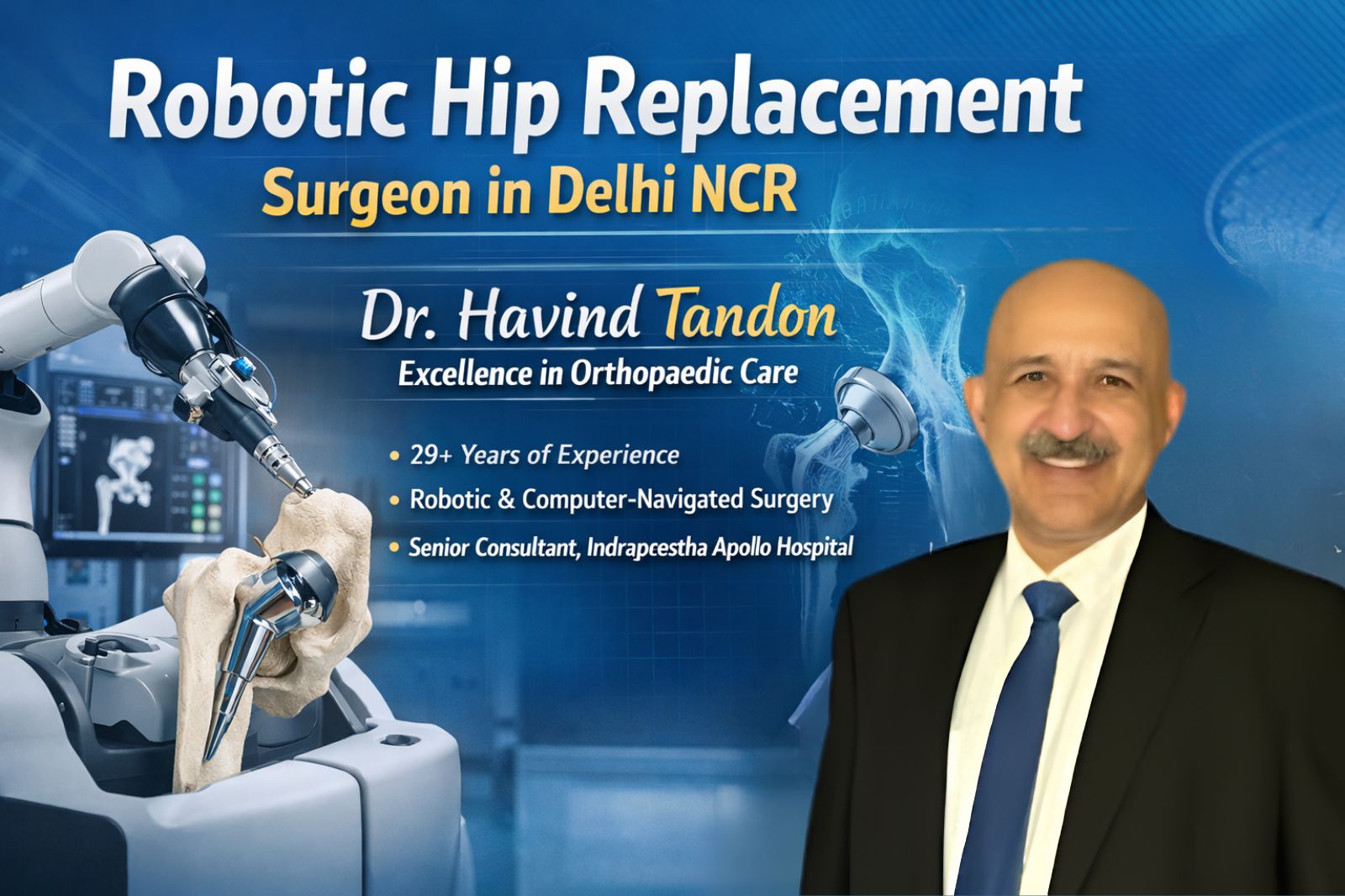
Robotic Hip Replacement Surgeon in Delhi NCR: Advancing Precision in Joint Replacement Surgery
Joint pain and mobility limitations caused by arthritis, injury, or age-related degeneration can significantly impact daily life. With rapid advancements in medical technology, robotic-assisted joint replacement has transformed orthopedic surgery by offering unmatched precision, safety, and personalized treatment outcomes.
Today, patients seeking long-lasting relief and faster recovery increasingly prefer robotic knee and hip replacement procedures, which combine surgical expertise with intelligent robotic systems for improved accuracy and consistency.
Why Choose a Robotic Hip Replacement Surgeon in Delhi NCR for Advanced Joint Care?
Robotic hip and knee replacement surgery represents a major evolution from conventional joint replacement techniques. Instead of relying solely on manual instruments, surgeons now use robotic assistance to plan and execute procedures with exceptional precision.
This technology allows:
- Personalized surgical planning
- Accurate implant positioning
- Better joint alignment
- Reduced surgical trauma
- Improved functional recovery
Proper alignment and implant placement are critical factors that influence implant longevity, patient satisfaction, and long-term mobility. Robotic systems help achieve these goals by minimizing human error and improving reproducibility.
Understanding Robotic Knee and Hip Replacement Surgery
Robotic-assisted surgery uses advanced imaging and computer-guided technology to create a 3D model of the patient’s joint before surgery.
Pre-Operative Planning
A CT scan generates a detailed digital representation of the joint, allowing surgeons to design a customized surgical plan tailored to the patient’s anatomy.
Intraoperative Guidance
During surgery, the robotic system provides real-time feedback and visual guidance, helping surgeons perform highly accurate bone preparation and implant positioning.
Precision Execution
The robotic arm operates within predefined safety boundaries, ensuring controlled and precise surgical movements while the surgeon maintains complete control.
Types of Robotic Systems Used in Orthopaedic Surgery
Robotic joint replacement systems are categorized based on their level of automation:
Passive Systems
- Provide navigation guidance only
- Surgeon performs all surgical actions
Active Systems
- Robot performs certain steps autonomously under programming
Semi-Active Systems
- Most widely used technology
- Surgeon controls the procedure
- Robot provides live monitoring and accuracy feedback
This collaboration between human expertise and robotic intelligence ensures safer and more predictable outcomes.
Benefits of Robotic-Assisted Joint Replacement
✅ Personalized Treatment Approach
Every surgery is planned specifically for the individual patient, improving implant fit and reducing complications.
✅ Superior Accuracy
Robotics enables millimeter-level precision in implant placement, improving joint mechanics.
✅ Improved Joint Balance
Real-time visualization allows optimal adjustment of ligaments and soft tissues, resulting in natural movement.
✅ Less Bone and Tissue Damage
Targeted bone resection preserves healthy structures.
✅ Reduced Blood Loss
Controlled surgical actions lead to safer procedures.
✅ Faster Recovery
Patients often experience:
- Less postoperative pain
- Early mobility
- Shorter hospital stay
- Quicker return to daily activities
✅ Better Long-Term Implant Performance
Accurate alignment reduces implant wear and lowers revision surgery risks.
Safety Features of Robotic Joint Replacement
Modern robotic systems are designed with advanced safety mechanisms, including:
- Haptic boundaries preventing unintended movement
- Continuous intraoperative monitoring
- Real-time surgical adjustments
- Precision tracking of instruments
These features enhance surgeon confidence while improving patient safety.
Robotic Surgery vs Traditional Joint Replacement
| Feature | Traditional Surgery | Robotic-Assisted Surgery |
| Surgical Planning | Standardized | Personalized |
| Implant Positioning | Manual | Computer-guided |
| Accuracy | Moderate | Highly precise |
| Recovery | Standard | Often faster |
| Outcome Consistency | Variable | Highly reproducible |
About Dr. Havind Tandon — Excellence in Orthopaedic Care
With over 29 years of experience, Dr. Havind Tandon stands as a distinguished orthopaedic surgeon known for excellence in joint replacement and advanced orthopedic procedures.
He specializes in:
- Total joint arthroplasty
- Advanced arthroscopic procedures
- Robotic and computer-navigated joint replacement surgeries
As a Senior Consultant at Indraprastha Apollo Hospital and the founder of Joint View Clinic, Dr. Tandon is dedicated to delivering high-quality orthopaedic care focused on precision, innovation, and patient-centered treatment. His approach combines extensive surgical expertise with advanced technology to ensure optimal outcomes and improved quality of life for patients undergoing joint replacement procedures.
Who Can Benefit from Robotic Hip or Knee Replacement?
Robotic-assisted joint replacement may be recommended for individuals experiencing:
- Severe osteoarthritis
- Chronic hip or knee pain
- Joint stiffness and deformity
- Limited mobility
- Failure of non-surgical treatments
- Reduced daily activity due to joint damage
A detailed orthopedic evaluation helps determine whether robotic surgery is the right treatment option.
The Future of Joint Replacement Surgery
Robotics is redefining orthopedic surgery by enhancing precision, safety, and personalization. As technology continues to evolve, robotic joint replacement is expected to become the global standard for treating advanced joint disorders.
Patients today are not only seeking pain relief but also long-term mobility, faster recovery, and improved quality of life — goals that robotic-assisted surgery is uniquely positioned to achieve.